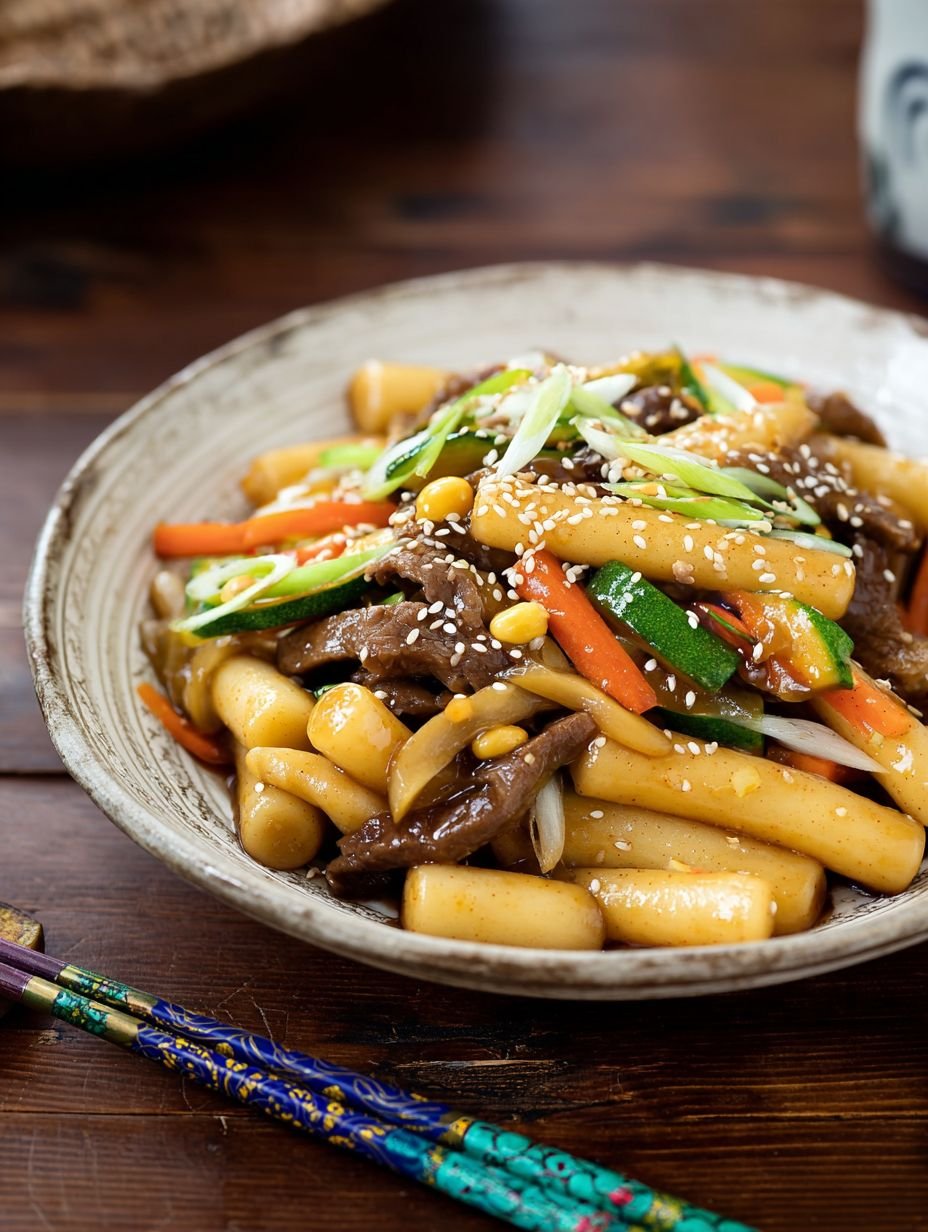
Imagine sinking your teeth into tender, chewy rice cakes, rich with a savory, subtly sweet soy glaze, intertwined with succulent beef and crisp-tender vegetables. This isn’t just a meal; it’s a symphony for your taste buds, a culinary embrace that whispers tales of Korean royalty. I remember the first time I whipped up a batch, feeling like a culinary genius, only to realize later my “secret ingredient” was simply following a fantastic, straightforward recipe.
Why This Gungjung Tteokbokki Recipe Will Be Your New Favorite
This recipe for Gungjung Tteokbokki is designed to impress without the stress, making it an ideal choice for both weeknight dinners and special occasions. Its easy preparation belies a truly unique flavor profile, blending savory umami notes with a delicate sweetness that captivates from the first bite. Beyond taste, the dish boasts a stunning appearance, vibrant with colorful vegetables and glistening rice cakes, making it a feast for the eyes as well. Plus, its versatility means you can easily adapt it to your preferences, ensuring it’s always a crowd-plepleaser.
Ingredients for a Royal Feast
Here’s what you need for this delicious dish:
- **Korean rice cakes (garaetteok), cylindrical** These are the heart of our Gungjung Tteokbokki, providing that wonderfully chewy texture. Opt for fresh if you can, but softened frozen or dried cakes work beautifully, ensuring they are tender but not mushy.
- **Beef sirloin or ribeye, thinly sliced** For the most tender bites of beef in your savory Korean rice cake dish, choose high-quality sirloin or ribeye. Slicing it thinly against the grain is key to achieving that melt-in-your-mouth texture.
- **Soy sauce** This essential ingredient brings the deep, umami-rich foundation to both the beef marinade and the main sauce, lending a rich saltiness.
- **Sugar** Balancing the savory notes, sugar (or Korean rice syrup) adds a subtle sweetness to both the beef marinade and the main sauce, crucial for the traditional royal court flavor profile.
- **Minced garlic** Aromatic and pungent, fresh minced garlic infuses both the beef and the overall sauce with its irreplaceable depth of flavor.
- **Sesame oil** Adding a distinctive nutty aroma and flavor, sesame oil is a hallmark of Korean cuisine and features in both the beef marinade and the final savory sauce.
- **Black pepper** A touch of freshly ground black pepper in both the marinade and the sauce provides a mild, earthy warmth that enhances other flavors.
- **Medium onion, thinly sliced** Onions provide a sweet and aromatic base when stir-fried, contributing to the overall depth of flavor in this Gungjung Tteokbokki.
- **Medium carrot, julienned** Carrots add a touch of sweetness, a pop of color, and a pleasant crisp-tender texture to the dish.
- **Medium zucchini, half-moon sliced** Zucchini offers a delicate texture and refreshing flavor, absorbing the savory sauce beautifully.
- **Shiitake mushrooms, sliced (or other preferred mushrooms)** Earthy and rich, shiitake mushrooms contribute a wonderful umami depth and a satisfying chewiness to the vegetable mix.
- **Green onions, sliced diagonally (for garnish)** These vibrant green slices offer a fresh, slightly pungent finish, perfect for garnishing the elegant Gungjung Tteokbokki.
- **Pine nuts (optional, for garnish)** For an added touch of elegance and a subtle buttery crunch, toasted pine nuts are an excellent optional garnish.
- **Beef broth or water** This forms the liquid base of the savory sauce, allowing the ingredients to simmer and meld, creating a cohesive and flavorful glaze.
- **Toasted sesame seeds (for garnish)** A sprinkle of toasted sesame seeds provides a lovely nutty aroma and a delicate visual appeal to finish off your quick tteokbokki recipe.
All ingredients with their exact quantities can be found in the recipe card below.
Step-by-Step Instructions to Make This Gungjung Tteokbokki | Quick Recipe
Here’s a simple guide to help you prepare this delicious recipe:
Step 1: Preparing the Rice Cakes
If you are using fresh Korean rice cakes, gently separate them by hand. For frozen or dried rice cakes, submerge them in warm water for 15-20 minutes until they soften, then thoroughly drain all the water before proceeding.
Step 2: Marinating the Beef for Flavor
In a medium-sized bowl, combine the thinly sliced beef sirloin or ribeye with the marinade ingredients: 2 tablespoons of soy sauce, 1 tablespoon of sugar, 1 tablespoon of minced garlic, 1 teaspoon of sesame oil, and 1/4 teaspoon of black pepper. Mix these components well until the beef is evenly coated. Allow the beef to marinate for a minimum of 15 minutes while you focus on preparing the remaining ingredients.
Step 3: Prepping Your Vegetables
Take this time to carefully prepare all of your vegetables: thinly slice the half onion, julienne the medium carrot, half-moon slice the medium zucchini, and slice the 100g of shiitake mushrooms. Remember to also slice the two green onions diagonally; these will be reserved for a beautiful garnish at the end.
Step 4: Stir-Frying the Marinated Beef
Heat 1 tablespoon of cooking oil in a large pan or wok over medium-high heat. Once the oil is shimmering, add the marinated beef to the pan. Stir-fry the beef, moving it frequently, for approximately 3-4 minutes, or until it is mostly cooked through and has developed an appealing brown color. Carefully remove the cooked beef from the pan and set it aside on a plate.
Step 5: Sautéing the Initial Vegetables
Using the same pan where the beef was cooked, add the thinly sliced onions and julienned carrots. Continue to stir-fry these vegetables for 2-3 minutes until they just begin to soften, releasing their sweet aromas.
Step 6: Adding Remaining Vegetables to the Pan
Now, introduce the half-moon sliced zucchini and the sliced shiitake mushrooms to the pan with the onions and carrots. Continue to stir-fry for an additional 2-3 minutes, aiming for the vegetables to be crisp-tender, maintaining a slight bite rather than becoming overly soft.
Step 7: Combining Beef and Rice Cakes
Return the previously cooked beef to the pan with the stir-fried vegetables. Next, add the softened Korean rice cakes, distributing them evenly among the other ingredients.
Step 8: Preparing and Pouring the Sauce
In a small separate bowl, whisk together all the sauce ingredients: 1/2 cup of beef broth or water, 2 tablespoons of soy sauce, 1 tablespoon of sugar (or Korean rice syrup), 1 tablespoon of sesame oil, 1 teaspoon of minced garlic, and 1/4 teaspoon of black pepper. Once thoroughly combined, pour this savory sauce mixture evenly over all the ingredients in the pan.
Step 9: Simmering to Perfection
Bring the entire mixture in the pan to a gentle simmer. Continue cooking for 5-7 minutes, stirring occasionally to ensure everything is coated and cooks evenly. The sauce should thicken slightly, and the rice cakes should become wonderfully tender and fully infused with the rich, savory glaze.
Step 10: Serving Your Gungjung Tteokbokki
Once the sauce has thickened and the rice cakes are tender, transfer the Gungjung Tteokbokki directly to a serving dish. Garnish generously with the pre-sliced green onions, a sprinkle of toasted sesame seeds, and, if you’re using them, pine nuts. Serve immediately to savor the delicate balance of flavors and textures in this quick recipe.
Gungjung Tteokbokki: Royal Flavors Made Simple
The beauty of this royal court dish lies not just in its exquisite taste but also in its surprising simplicity. It’s a testament to the idea that truly delicious food doesn’t need to be overly complicated. Many home cooks might feel intimidated by Korean cuisine, but learning how to make Gungjung Tteokbokki is an excellent starting point, revealing that complex flavors can be achieved with straightforward steps and accessible ingredients. This particular rendition emphasizes efficiency without compromising on the authentic savory and subtly sweet profile, making it a perfect quick recipe for any night of the week.
The Story Behind the Royal Tteokbokki
Unlike its fiery red, street-food counterpart, Gungjung Tteokbokki originated in the royal courts of the Joseon Dynasty. It was a dish fit for kings and queens, meant to be nourishing, elegant, and harmonious in flavor. This historical context adds a layer of fascination to the dish, transforming a simple meal into a culinary journey through time. When you prepare this savory Korean rice cake dish, you’re not just cooking; you’re participating in a tradition, bringing a piece of history to your modern kitchen. It’s a dish that truly reflects the artistry and sophistication of traditional Korean cooking, making it more than just a quick tteokbokki recipe.
Expert Tips for the Perfect Gungjung Tteokbokki
Achieving that perfect texture and flavor for your royal court rice cakes is easier with a few insider tips. For the best chewiness, always aim for fresh Korean rice cakes if they are readily available in your local Asian market. If you are using dried varieties, remember the critical step of fully rehydrating them in warm water until they are pliable but careful not to over-soak them to the point of mushiness. This ensures they absorb the savory sauce beautifully without falling apart.
When preparing your beef, slicing against the grain is a non-negotiable step to guarantee maximum tenderness in every bite. The initial marinade for the beef not only infuses it with incredible flavor but also helps to keep it moist and succulent during the stir-frying process. You’ll find that the quick stir-fry method ensures the beef remains tender.
Regarding the sauce, feel free to adjust the sweetness to perfectly match your palate. A little more or less sugar can dramatically alter the balance, so taste as you go. Remember, the vegetables should retain a slight crispness for an optimal textural contrast against the chewy rice cakes and tender beef. Do not overcook them; their vibrant colors and slight crunch are part of the dish’s appeal. Lastly, if you find your sauce becoming too thick during simmering, a small splash of additional beef broth or water can bring it back to your desired consistency, ensuring every component is perfectly coated.
Nutrition Information for Your Royal Feast
For those keeping an eye on their dietary intake, this Gungjung Tteokbokki | Quick Recipe offers a satisfying and balanced meal. Each serving provides approximately 450 kcal, a good estimation for a hearty portion. You’ll also benefit from a substantial 25g of protein, which is excellent for muscle repair and satiety. The dish contains around 55g of carbohydrates, providing sustained energy, and an estimated 15g of fat, contributing to the rich flavor and texture. This makes the savory Korean rice cake dish not only delicious but also a nourishing option for your family.
Frequently Asked Questions About Gungjung Tteokbokki
**What’s the difference between Gungjung Tteokbokki and regular Tteokbokki?**
The main difference lies in the flavor profile and origin. Regular, or “modern,” Tteokbokki is typically spicy, vibrant red, and made with gochujang (Korean chili paste), commonly found as street food. Gungjung Tteokbokki, on the other hand, is a non-spicy, savory, and subtly sweet dish made with a soy-based sauce. It originated in the royal court, making it an elegant, traditional royal court rice cake dish. This quick tteokbokki recipe offers a savory alternative.
**Can I make this dish ahead of time?**
While this Gungjung Tteokbokki is best enjoyed immediately after preparation to savor the fresh textures of the crisp-tender vegetables and chewy rice cakes, you can certainly prepare some components in advance. Marinating the beef can be done up to a day ahead, and chopping your vegetables can save you time on cooking day. Reheating the finished dish might soften the rice cakes further, so for optimal results, cook and serve fresh.
**What kind of beef is best for this royal court dish?**
For the most tender and flavorful Gungjung Tteokbokki, beef sirloin or ribeye are excellent choices. Their marbling ensures tenderness when thinly sliced and stir-fried. It is crucial to slice the beef against the grain to prevent it from becoming tough, a key step for any quick tteokbokki recipe involving beef.
**Can I substitute other vegetables in this savory Korean rice cake dish?**
Absolutely! While onions, carrots, zucchini, and shiitake mushrooms are traditional, this quick recipe is quite versatile. Feel free to incorporate other vegetables you enjoy, such as bell peppers, spinach, or even broccoli florets. Just be mindful of their cooking times to ensure they remain crisp-tender. This adaptability makes learning how to make Gungjung Tteokbokki even more appealing.
Conclusion: Your Journey to Royal Korean Cuisine
There you have it—a comprehensive guide on how to make Gungjung Tteokbokki | Quick Recipe, bringing the elegance of Korean royal cuisine straight to your kitchen. This savory Korean rice cake dish offers a delightful escape from the ordinary, proving that gourmet flavors are well within reach for the home cook. With its tender beef, chewy rice cakes, and a medley of crisp-tender vegetables bathed in a subtly sweet and savory soy glaze, this dish promises to be a new favorite. So gather your ingredients, follow these simple steps, and prepare to impress yourself and your loved ones with a meal fit for royalty, all without spending hours in the kitchen. Enjoy the rich history and exquisite taste of this timeless classic!
Perfecting the Cooking Process
This recipe flows smoothly when you prioritize. Begin by marinating the beef as you hydrate the rice cakes and chop all the vegetables. Stir-fry the beef first, remove it, then build flavors with the vegetables. Finally, return the beef and add the sauce for simmering, ensuring everything cooks perfectly.
Add Your Personal Touch
Feel free to customize this royal court tteokbokki. While beef sirloin or ribeye works wonderfully, thinly sliced chicken breast or lamb are also great options for a different flavor. For the shiitake mushrooms, cremini or oyster mushrooms make delightful substitutes.
Storage & Reheating
To preserve the delightful chewiness of the rice cakes and crisp-tender vegetables, store leftovers in an airtight container for up to three days. Reheat gently on the stovetop or microwave. Add a splash of beef broth or water to rejuvenate the sauce.
Helpful Chef Tips
My first taste of royal court tteokbokki at a bustling Seoul market was unforgettable. The warmth of the savory sauce and chewy rice cakes instantly became a cherished memory.
Final Thoughts
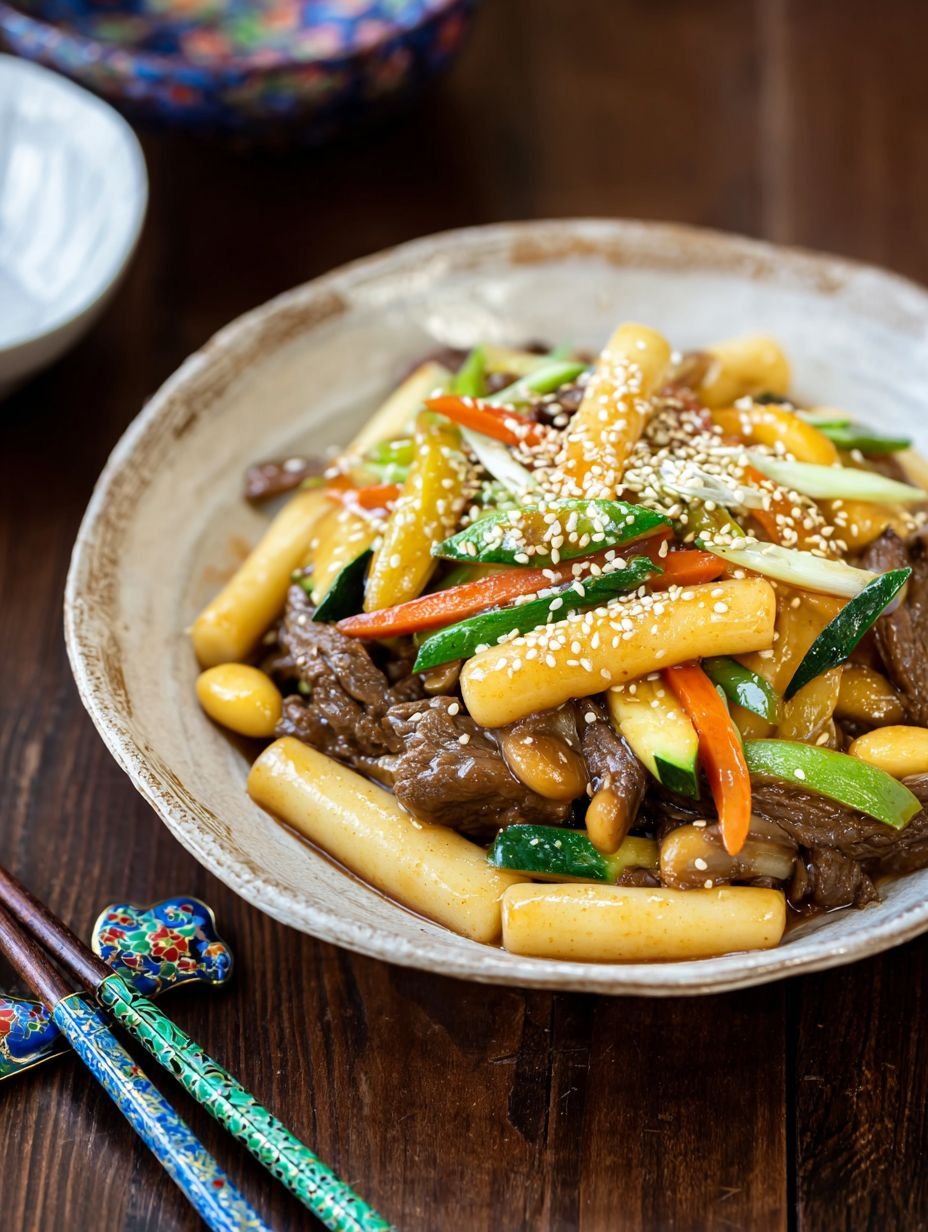
There you have it – a truly remarkable dish ready to grace your table. This elegant Gungjung Tteokbokki brings together tender beef, vibrant vegetables, and delightfully chewy rice cakes in a rich, subtly sweet soy-based glaze. The harmony of textures and the savory depth of flavor make it a stand-out meal. Preparing this quick recipe means you can enjoy a taste of Korean culinary tradition without spending hours in the kitchen. Don’t just read about it; dive in and experience the warmth and deliciousness of this royal court classic tonight!
Print
How to Make Gungjung Tteokbokki | Quick Recipe
- Total Time: 40 minutes
- Yield: 4 1x
Description
Gungjung Tteokbokki is a classic Korean royal court dish, featuring chewy rice cakes simmered with tender slices of beef and an assortment of colorful vegetables in a savory, subtly sweet soy-based sauce. The dish offers a harmonious blend of textures, from the soft rice cakes to the crisp-tender vegetables and succulent beef, all coated in a rich, umami-forward glaze. It is traditionally garnished with toasted sesame seeds and fresh green onions, adding a delicate nutty aroma and a touch of freshness. This elegant dish is prepared by stir-frying the ingredients and then gently simmering them to allow the flavors to meld beautifully.
Ingredients
- *For the Rice Cakes:*
- 500g Korean rice cakes (garaetteok), cylindrical
- *For the Beef Marinade:*
- 200g beef sirloin or ribeye, thinly sliced
- 2 tablespoons soy sauce
- 1 tablespoon sugar
- 1 tablespoon minced garlic
- 1 teaspoon sesame oil
- 1/4 teaspoon black pepper
- *For the Vegetables:*
- 1/2 medium onion, thinly sliced
- 1 medium carrot, julienned
- 1/2 medium zucchini, half-moon sliced
- 100g shiitake mushrooms, sliced (or other preferred mushrooms)
- 2 green onions, sliced diagonally (for garnish)
- 1 tablespoon pine nuts (optional, for garnish)
- *For the Sauce:*
- 1/2 cup beef broth or water
- 2 tablespoons soy sauce
- 1 tablespoon sugar (or Korean rice syrup)
- 1 tablespoon sesame oil
- 1 teaspoon minced garlic
- 1/4 teaspoon black pepper
- 1 tablespoon toasted sesame seeds (for garnish)
Instructions
- If using fresh rice cakes, separate them. If using frozen or dried rice cakes, soak them in warm water for 15-20 minutes until softened, then drain.
- In a bowl, combine the thinly sliced beef with the marinade ingredients (2 tablespoons soy sauce, 1 tablespoon sugar, 1 tablespoon minced garlic, 1 teaspoon sesame oil, 1/4 teaspoon black pepper). Mix well and let it marinate for at least 15 minutes while you prepare other ingredients.
- Prepare all vegetables: slice the onion, julienne the carrot, half-moon slice the zucchini, and slice the mushrooms. Slice green onions for garnish.
- In a large pan or wok, heat 1 tablespoon of cooking oil over medium-high heat. Add the marinated beef and stir-fry until it is mostly cooked through and browned, about 3-4 minutes. Remove the beef from the pan and set aside.
- In the same pan, add the sliced onions and carrots. Stir-fry for 2-3 minutes until they begin to soften.
- Add the zucchini and mushrooms to the pan and continue to stir-fry for another 2-3 minutes until crisp-tender.
- Return the cooked beef to the pan. Add the softened rice cakes.
- In a small bowl, whisk together the sauce ingredients (1/2 cup beef broth, 2 tablespoons soy sauce, 1 tablespoon sugar, 1 tablespoon sesame oil, 1 teaspoon minced garlic, 1/4 teaspoon black pepper). Pour the sauce over the ingredients in the pan.
- Bring the mixture to a gentle simmer, stirring occasionally, for 5-7 minutes, or until the sauce has thickened slightly and the rice cakes are tender and thoroughly coated.
- Transfer the Gungjung Tteokbokki to a serving dish. Garnish generously with sliced green onions, toasted sesame seeds, and pine nuts if using. Serve immediately.
Notes
* For the best texture, use fresh rice cakes if available. If using dried, ensure they are fully rehydrated but not mushy before cooking.
* Slice the beef against the grain to ensure tenderness. Marinating the beef helps infuse flavor and keeps it moist.
* Adjust the sweetness of the sauce to your preference by adding more or less sugar.
* Do not overcook the vegetables; they should retain a slight crispness for optimal texture.
* If the sauce becomes too thick, add a splash more beef broth or water to reach your desired consistency.
- Prep Time: 20 minutes
- Cook Time: 20 minutes
Nutrition
- Calories: 450 kcal (Estimated per serving)
- Fat: 15g (Estimated per serving)
- Carbohydrates: 55g (Estimated per serving)
- Protein: 25g (Estimated per serving)
FAQs
How should I prepare the Korean rice cakes before cooking?
If you are using fresh Korean rice cakes (garaetteok), you simply need to separate them before adding them to the pan. However, if your rice cakes are frozen or dried, they require a bit more preparation. Soak them in warm water for approximately 15 to 20 minutes. This process softens them, ensuring they achieve the desired chewy texture when cooked. Once softened, make sure to drain them thoroughly before incorporating them into the Gungjung Tteokbokki, as excess water can dilute the delicious sauce. This simple step ensures optimal texture.
What is the best way to prepare the beef for this dish?
For the most tender results, start by choosing a thinly sliced beef sirloin or ribeye. Once you have your beef, combine it in a bowl with the marinade ingredients: two tablespoons of soy sauce, one tablespoon of sugar, one tablespoon of minced garlic, one teaspoon of sesame oil, and a quarter teaspoon of black pepper. Mix everything thoroughly to ensure the beef is well coated. Let it marinate for at least 15 minutes. This step is crucial for infusing flavor and helps keep the beef moist and succulent during the stir-frying process.
How can I adjust the sauce consistency if it’s not quite right?
The sauce for this recipe is designed to thicken slightly as it simmers, coating all the ingredients beautifully. After pouring the whisked sauce mixture over the ingredients in the pan, let it simmer for about 5-7 minutes, stirring occasionally. During this time, the sauce should reduce and achieve a rich glaze. If you find that the sauce becomes too thick during the simmering process, you can easily rectify it. Simply add a splash more beef broth or water to the pan until it reaches your preferred consistency. This allows you to tailor the dish perfectly.
What are the key vegetables used in this Gungjung Tteokbokki recipe and how should they be cooked?
This delightful Gungjung Tteokbokki features a vibrant assortment of vegetables including half a medium onion, julienned carrot, half a medium zucchini sliced into half-moons, and sliced shiitake mushrooms. After the beef is cooked and set aside, the onions and carrots are stir-fried first for 2-3 minutes until they begin to soften. Then, the zucchini and mushrooms are added, continuing to stir-fry for another 2-3 minutes. The goal is to cook them until they are crisp-tender, not mushy. This ensures the vegetables retain a slight bite, adding a wonderful textural contrast to the soft rice cakes and tender beef.